





Bathroom tile combinations: 2026 style and trend guide
Choosing combinations for a bathroom tiles is not just an aesthetic decision: it is an investment that defines the perception of space, brightness and daily comfort.
In this Ceramic Connection guide, we show you how to combine wall and floor tiles using professional criteria to achieve a balanced, functional and visually appealing result in any renovation.
Basic principles for successfully combining tiles
Before selecting specific models, it is essential to understand the design rules used by interior designers to avoid cluttered or incoherent spaces.
60-30-10 rule: distribute visual weight with a dominant material (60%), a secondary one (30%) and a decorative accent (10%).
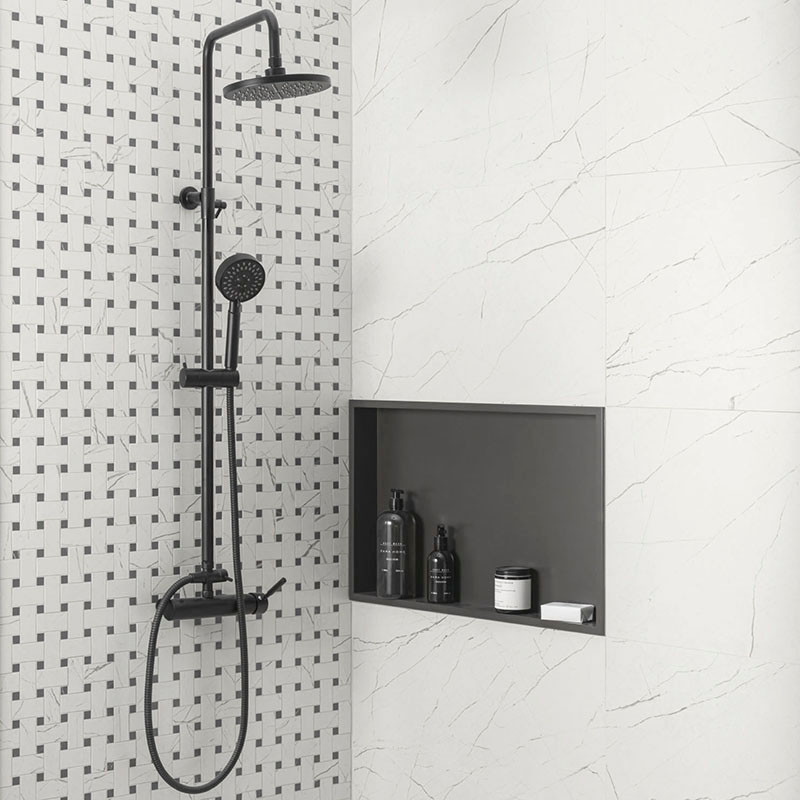
Mixing formats: combining large-format tiles on walls with mosaics in areas like the shower adds dynamism without overwhelming the design.
Mixing finishes: alternating matte and polished surfaces adds depth and avoids a flat look.
The power of grout: matching grout creates continuity; contrasting grout (e.g. black grout with subway tiles) enhances the pattern.

How to choose combinations based on your renovation
Every project has a different starting point. Identifying it is key to making the right decisions.
Full renovation: always start with the floor. It acts as the visual base and defines the rest of the materials. Wood or cement-effect porcelain tiles are versatile choices.
Wall or shower update: if keeping the existing floor, choose tiles with the same color temperature (warm or cool). In the shower, you can introduce controlled contrast.
Small bathrooms: prioritize visual continuity using the same material on walls and floors.
Large bathrooms: allows zoning using textures, colors or bold formats.
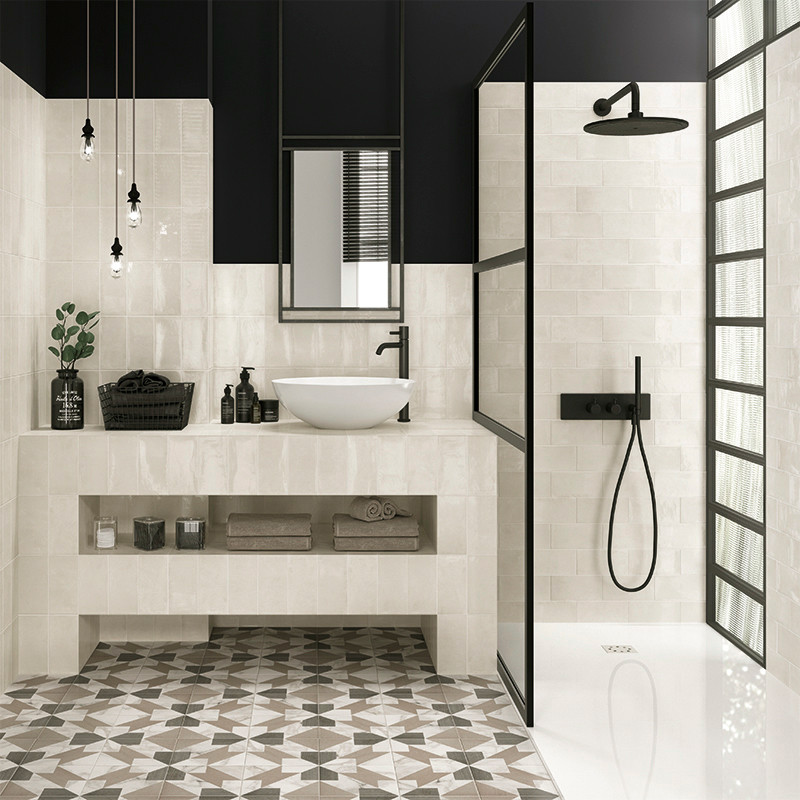
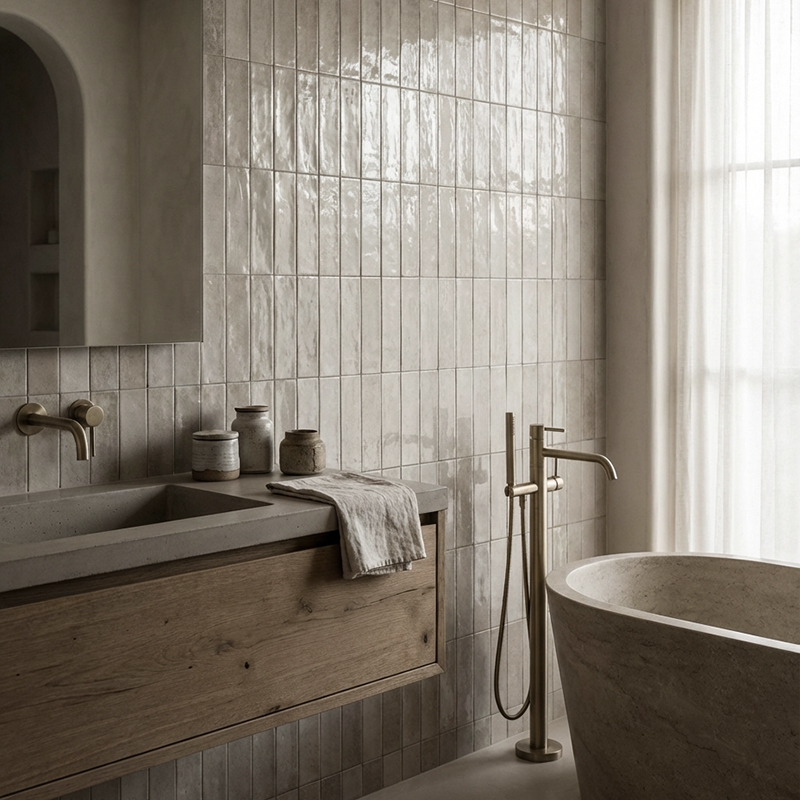
Tile combinations by color and trend
Minimalist: matte white + cement grey → clean, modern look.
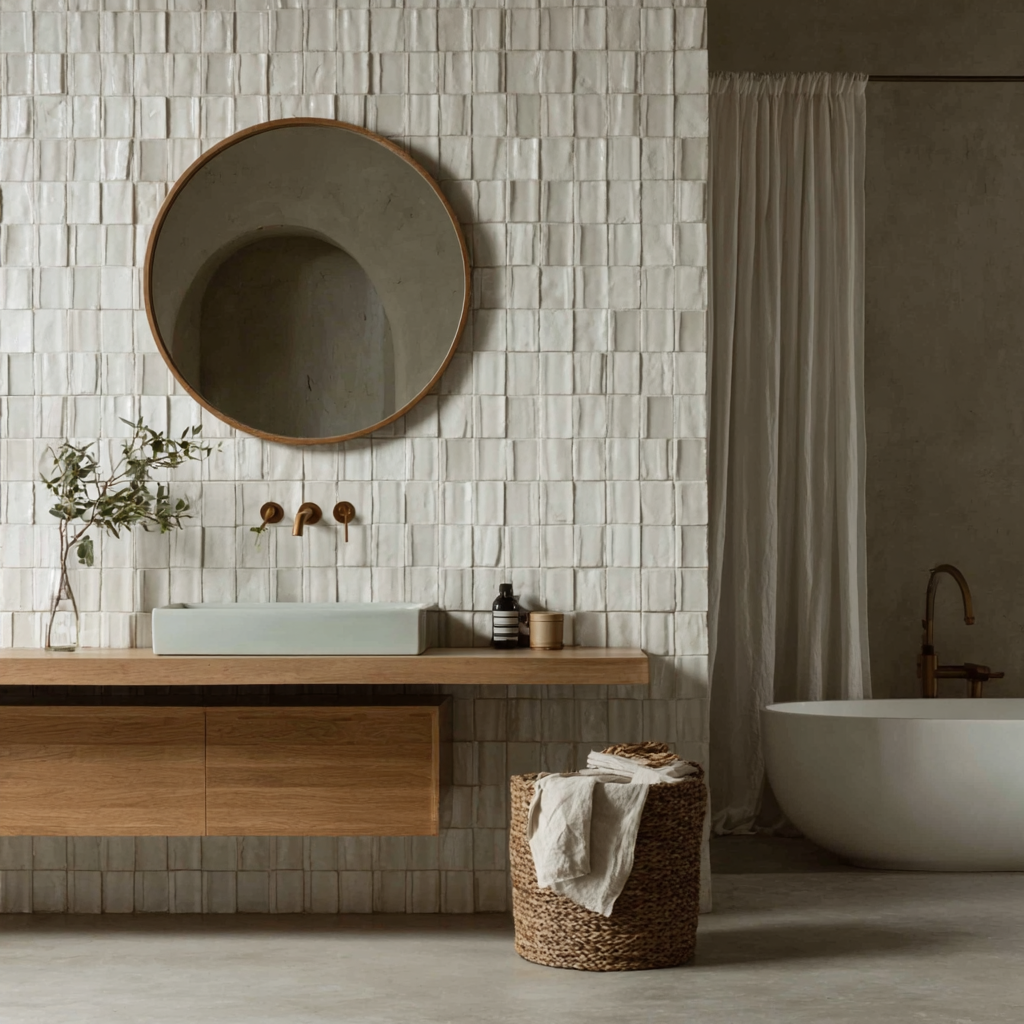
Natural: beige + earth tones + wood effect → warm spa-like feel.
Botanical: sage green + cream white → fresh and trendy.
Elegant: veined marble + black details → contemporary luxury.
Mediterranean: terracotta + cobalt blue → timeless character.
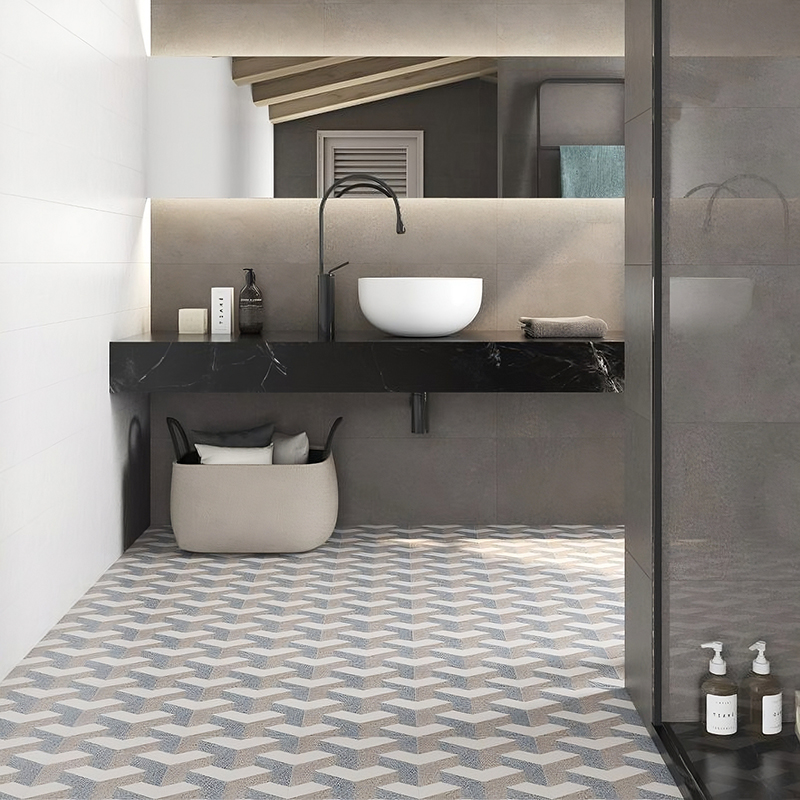
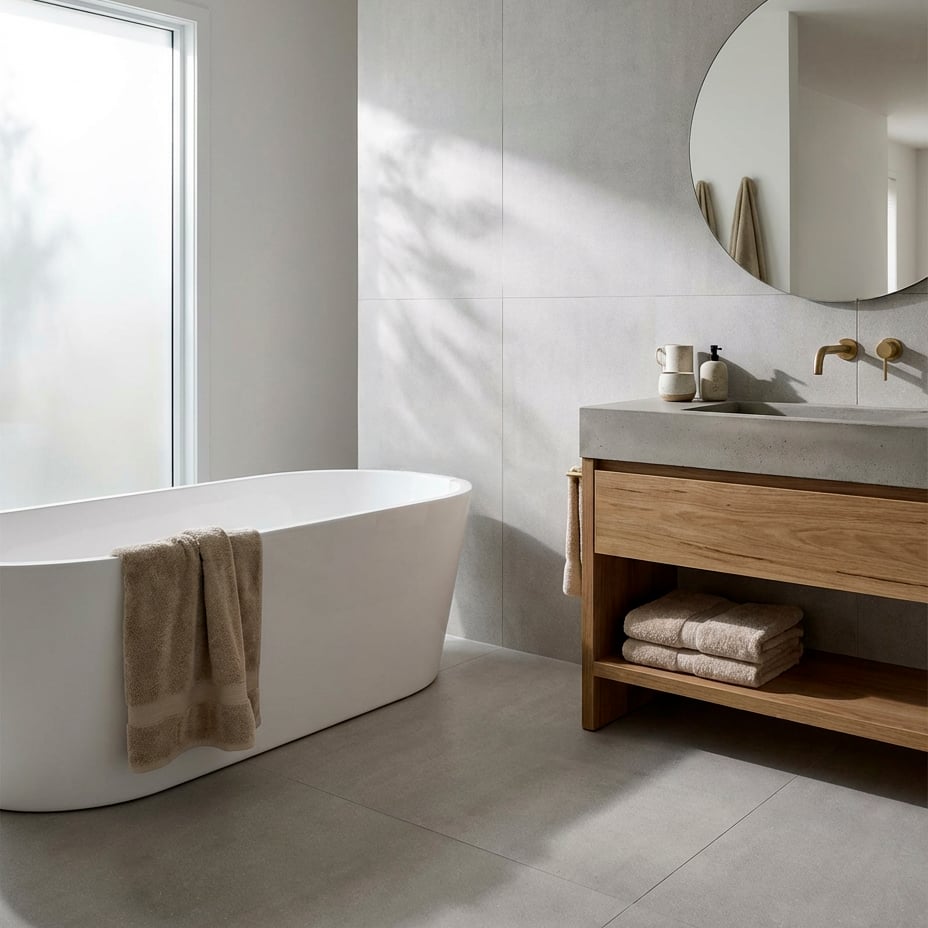
Tile combinations in the shower
The shower is the best place to introduce a focal point.
Accent wall: use decorative or textured tiles on the main wall.
Total continuity: use the same material on walls and floor (always anti-slip).
Vertical layout: placing rectangular tiles vertically enhances height perception.
Common mistakes to avoid
Too many textures: overly decorative materials create visual noise.
Ignoring lighting: dark tones absorb light; use lighter finishes in windowless bathrooms.
Not requesting samples: tile color changes under real lighting conditions.
Frequently Asked Questions (FAQ)
How many tiles should be combined? Ideally no more than 2–3 materials.
Can different collections be mixed? Yes, if thickness, tone and finish match.
Best format for small bathrooms? Large-format tiles reduce joints and visually enlarge the space.
Related posts
