






The difference between ceramic flooring and porcelain flooring lies in their composition, resistance, and water absorption. Porcelain is more compact, has a water absorption rate below 0.5%, and is suitable for outdoor areas and wet zones. Ceramic flooring is lighter, more affordable, and ideal for interiors with moderate foot traffic.
If you are renovating your home or selecting flooring for a new construction project, understanding these technical differences is essential to avoid mistakes and choose the right material based on the actual use of the space.
What is ceramic flooring?
Ceramic flooring is made from natural clays that are shaped and fired at temperatures between 900 and 1,100 °C. During this process, the material does not fully vitrify, resulting in a more porous structure compared to porcelain.
This means it has higher water absorption and lower density, although it remains a durable material perfectly suitable for indoor spaces.
You can explore options in our ceramic tiles category.
- Good resistance for domestic use.
- Wide variety of finishes and colors.
- More affordable than porcelain.
- Not recommended for outdoor use without protection.
What is porcelain flooring?
Porcelain tiles are made from more refined clays, pressed under high pressure and fired at temperatures above 1,200 °C. This process causes almost complete vitrification, closing the pores and increasing density.
The result is a flooring material extremely resistant to wear, moisture, and temperature changes.
Browse our selection of porcelain tiles .
- Water absorption below 0.5%.
- High resistance to impact and scratches.
- Suitable for indoor and outdoor use.
- Excellent durability in wet areas.
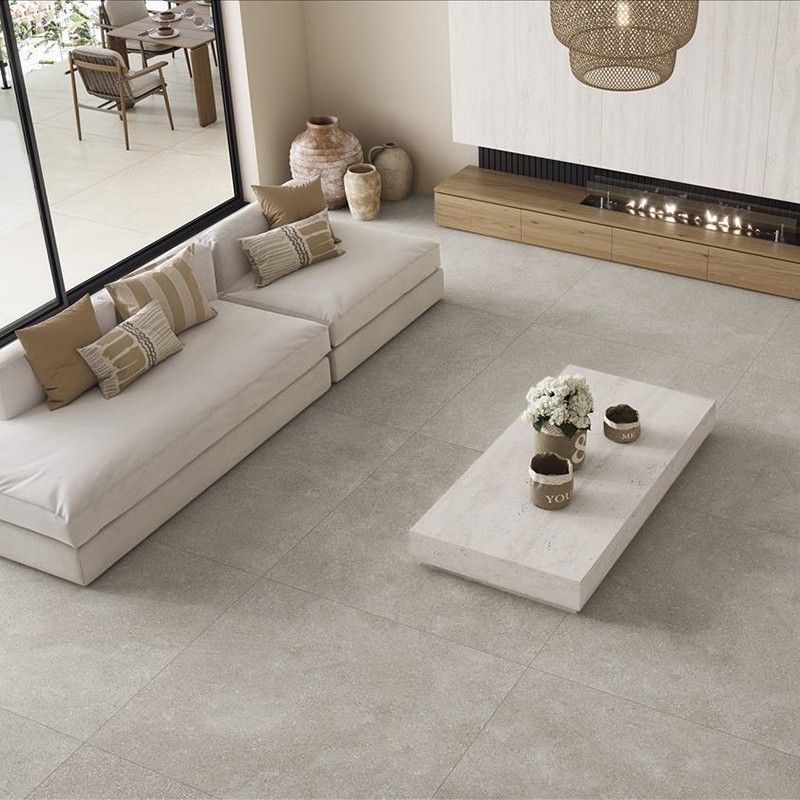
Technical comparison: ceramic vs porcelain
| Feature | Ceramic | Porcelain |
|---|---|---|
| Water absorption | 3–10% | < 0.5% |
| Wear resistance | Medium | High |
| Frost resistance | No | Yes |
| Outdoor use | Not recommended | Yes |
| Price | More affordable | Higher |
| Durability | Medium–high | Very high |
Which flooring should you choose?
The decision should not be based solely on price, but on actual use.
- Bathrooms and kitchens: porcelain due to its moisture resistance.
- Terraces and outdoor areas: anti-slip porcelain. Discover our outdoor tiles .
- Bedrooms: ceramic is sufficient if traffic is low.
- Family living rooms: porcelain if there are children or pets.
- Commercial spaces: technical porcelain.
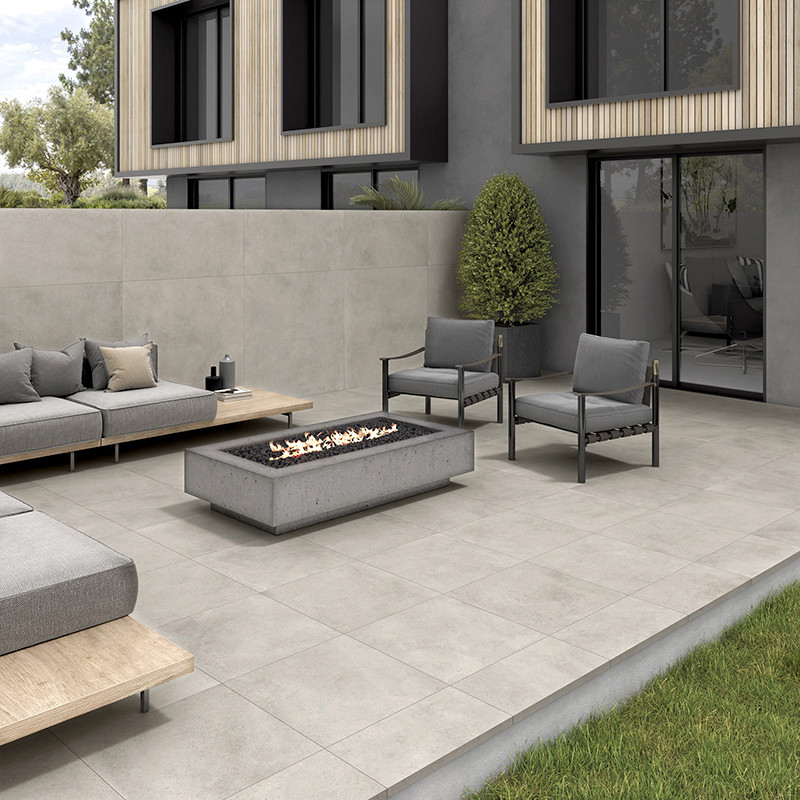
Stoneware, ceramic, or porcelain?
The term stoneware is often used generically, but it is important to distinguish:
- Ceramic: general term.
- Ceramic stoneware: more resistant than basic ceramic.
- Porcelain stoneware: the most technical and compact version.
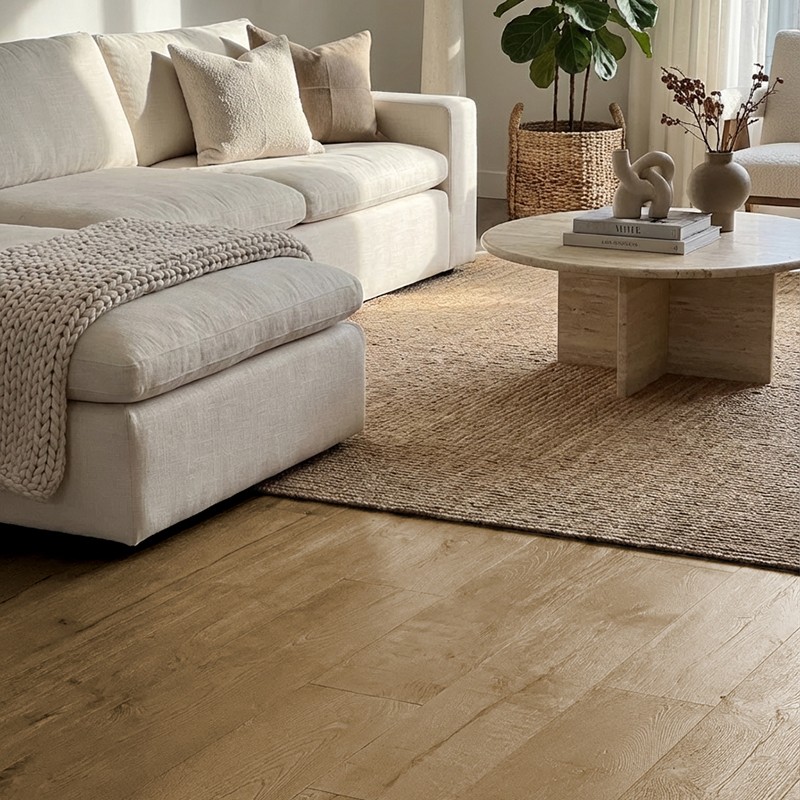
If you are looking for a warm aesthetic with maximum resistance, wood-look porcelain tiles are currently one of the most in-demand options.
Common mistakes when choosing flooring
- Choosing based only on price: this can lead to premature replacement costs.
- Ignoring moisture exposure: ceramic may deteriorate outdoors.
- Not assessing foot traffic: hallways and entrances require greater resistance.
- Not checking the substrate: porcelain requires a perfectly level base.
Conclusion: Which one is better?
There is no universally better material, only the most suitable one for each use.
- For outdoor and wet areas → porcelain.
- For interiors with moderate use → ceramic.
- For maximum durability and low maintenance → porcelain.
- For tighter budgets → ceramic.
Making the right choice from the beginning prevents technical issues and optimizes your long-term investment.
Related posts
