





Few decorative materials carry as much history as hydraulic tiles. Invented in Spain in the mid-19th century, these cement-based decorative tiles conquered homes, hotels and public buildings across Europe, Latin America and the Mediterranean for over a century. Their intricate geometric patterns, vivid colour palettes and distinctive matte texture made them the defining floor covering of an era.
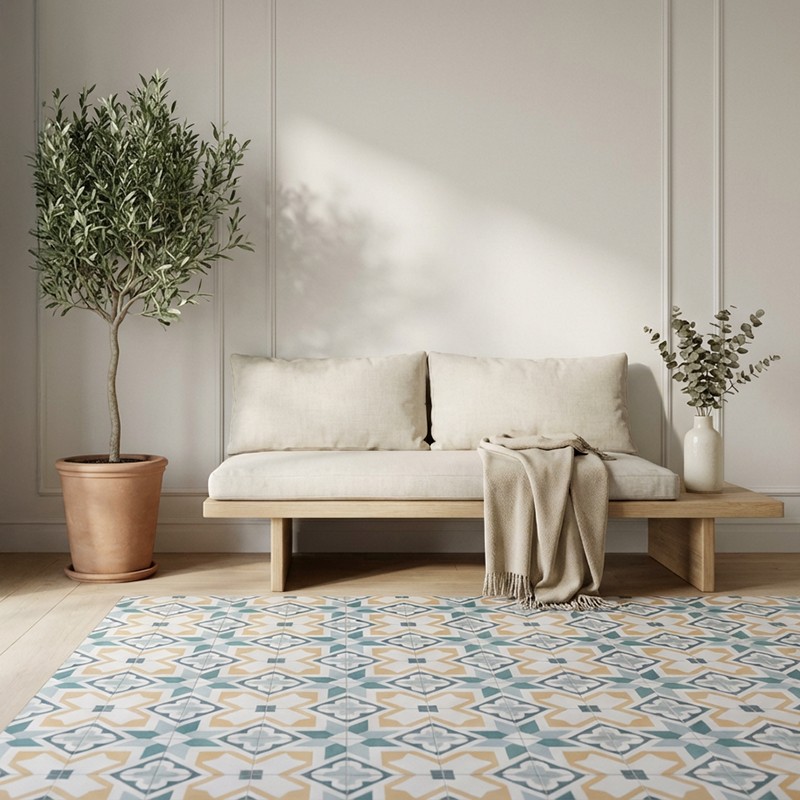
In 2026, hydraulic tiles are experiencing a powerful revival. Architects, interior designers and homeowners alike choose them to inject personality, history and character into any space. And thanks to porcelain hydraulic tiles effect, it is now possible to enjoy all that visual richness without any of the practical drawbacks of the original material: no periodic sealing, no porosity, no restrictions on use in wet or outdoor environments.
 ¡
¡What are hydraulic tiles? Origin and history
A hydraulic tile is a decorative cement tile that requires no kiln firing. Its name does not refer to water in the manufacturing process, but to the hydraulic press used to compact the materials. The earliest documented references date from 1857, with their consolidation as an alternative to natural stone occurring at the 1867 Universal Exhibition in Paris, where the Barcelona-based firm Garret, Rivet y Cía. presented them as a tile type that required no firing but was set solid by pressing.
The hydraulic tile is made up of square pieces (normally 20×20 cm) fabricated with white cement, colour pigments, marble dust and water. The mixture is poured into moulds that separate the colours and is pressed in a hydraulic press, without firing: hence the name.
Throughout the 20th century they were used across Spain, France and many other countries in the Mediterranean area. Their greatest expression was in Barcelona, where leading designers, influenced by the Modernist movement, began to use them in their projects and even designed their own patterns. Antoni Gaudí himself created custom hydraulic tile designs for his most iconic buildings, elevating the medium to high architectural culture.
Their use declined sharply from the 1960s to the early 2000s, due to the arrival of mass-produced terrazzo tiles and other competing materials. However, their return over the last decade has been unstoppable, driven by a growing appetite for materials with distinct identity in contrast to the uniformity of industrial floor coverings.
How traditional hydraulic tiles are made
The manufacturing process of original hydraulic tiles is one of their defining hallmarks — entirely artisanal, piece by piece. Production begins with the design, which is handed to a master craftsman who creates the metal mould (trepa or matrix). This is fitted into the hydraulic press mould, the coloured pigments are poured into each compartment, the matrix is removed, a mortar base of cement and aggregates is added, and the whole is pressed. The tiles are then demoulded, kept in frames for 24 hours and submerged in water tanks for a further 24 hours to complete the curing process.
This entirely manual process is what gives original hydraulic tiles their unique charm: each piece carries subtle variations in tone and texture that make every floor a one-of-a-kind composition. It is also, however, what makes them expensive, slow to produce and demanding to maintain.

Porcelain hydraulic-look tiles: advantages over the original
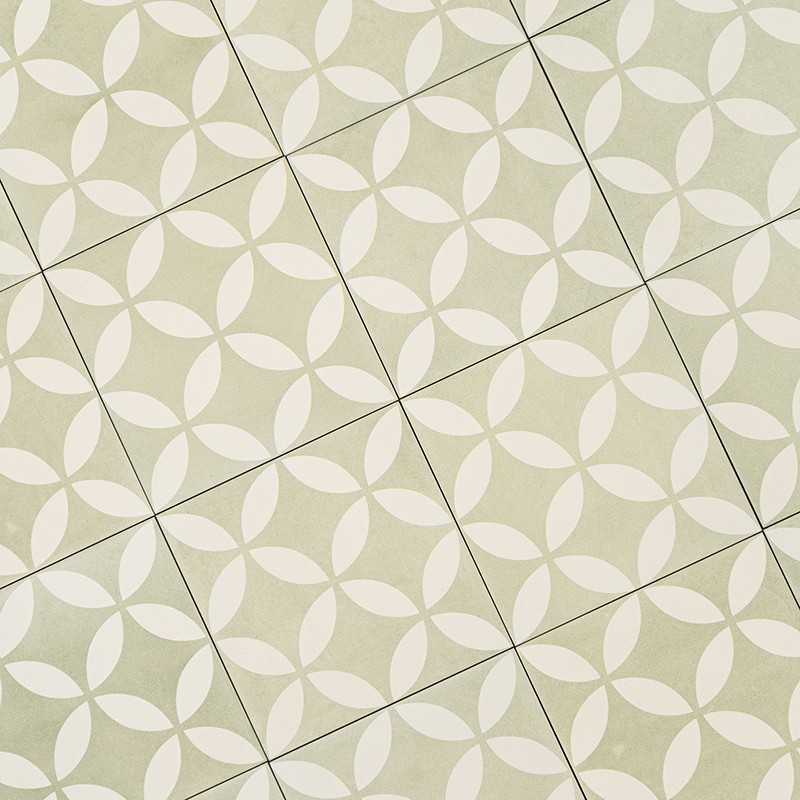
Porcelain hydraulic-look tiles are today the most in-demand solution for anyone who wants the hydraulic aesthetic without its limitations. The design is not a superficial "print"; it is a structural part of the tile. Twenty years from now, the geometric pattern will be just as sharp as on day one. Key technical advantages:
- No porosity or liquid absorption. Fully vitrified during firing at over 1,200 °C - impervious to stains, oils and cleaning products.
- No periodic sealing. Unlike original cement hydraulic tiles, porcelain requires no post-installation treatment.
- Suitable for wet rooms and outdoors. In its anti-slip version, porcelain hydraulic-look tiles can be installed in showers, terraces, pools and outdoor areas.
- Underfloor heating compatible. Porcelain is one of the best thermal conductors for flooring, unlike wood which acts as an insulator and slows heat transfer.
- Extensive pattern and format range. The hydraulic-look tile has become popular enough to find a wide variety of motifs, formats and sizes to suit almost every style.
- High resistance to heavy traffic. Essential for hospitality and retail environments where original cement tiles wear away over time, gradually erasing the pattern.
Hydraulic tile design trends for 2026
2026 trends in hydraulic-style tiles move towards a more serene aesthetic, chromatically richer and better integrated into contemporary architecture. Current taste gravitates towards patterns with more nuance, luminous backgrounds and combinations capable of adding character without hardening the space.
Contemporary geometry in earth tones. Geometry retains visual weight, but is supported by more approachable compositions and earthy tones that are easy to integrate. Two- and three-colour hydraulic patterns become less rigid, contrast is reduced and the overall effect breathes better, particularly useful in decorative flooring and continuous surfaces.
Victorian and floral revival. The floral and Victorian hydraulic style is being updated through greater chromatic depth and more enveloping compositions, resulting in proposals that are more contemporary, sophisticated and refined.
Luminous hydraulic in matte finish. Alongside bolder chromatic designs, there is growing interest in a lighter, more luminous contemporary hydraulic tile, matte finish, cleaner reading, that integrates more easily into neutral or Nordic interiors.
Mixed combinations with other surfaces. The latest trends suggest a wide range of combinations between hydraulic-look tiles and other imitation materials, such as wood-look porcelain — enabling a new use: defining zones or areas within a space, marking the boundary between dining room and living area, or decorating corridors and transition areas.
Where to use hydraulic tiles: room-by-room guide
Kitchen. The kitchen is hydraulic tiles' natural habitat. Whether on the floor or as a splashback, hydraulic tiles bring a Mediterranean, vintage character that no other surface material can replicate. A "ceramic rug" of hydraulic tiles beneath a kitchen island, surrounded by neutral porcelain, is one of the most sought-after compositions in 2026 renovation projects.
Bathroom. For a vintage-style bathroom, one of the best choices is a decorative hydraulic tile collection — one of the options with the most personality. In small bathrooms, a hydraulic feature wall or floor creates a powerful focal point without requiring further decoration.
Entrance hall and corridors. The entrance hall is the historical home of the hydraulic tile. From the bourgeois homes of the 19th century to today's design-forward renovations, hallways remain where hydraulic tiles have the greatest visual impact. A hydraulic floor with white walls is an unbeatable decorative statement.
Terrace and outdoor areas. In anti-slip, frost-resistant porcelain format, hydraulic-look tiles can be used outdoors without reservation, particularly strong in Mediterranean or colonial-style projects that seek visual continuity between interior and exterior.
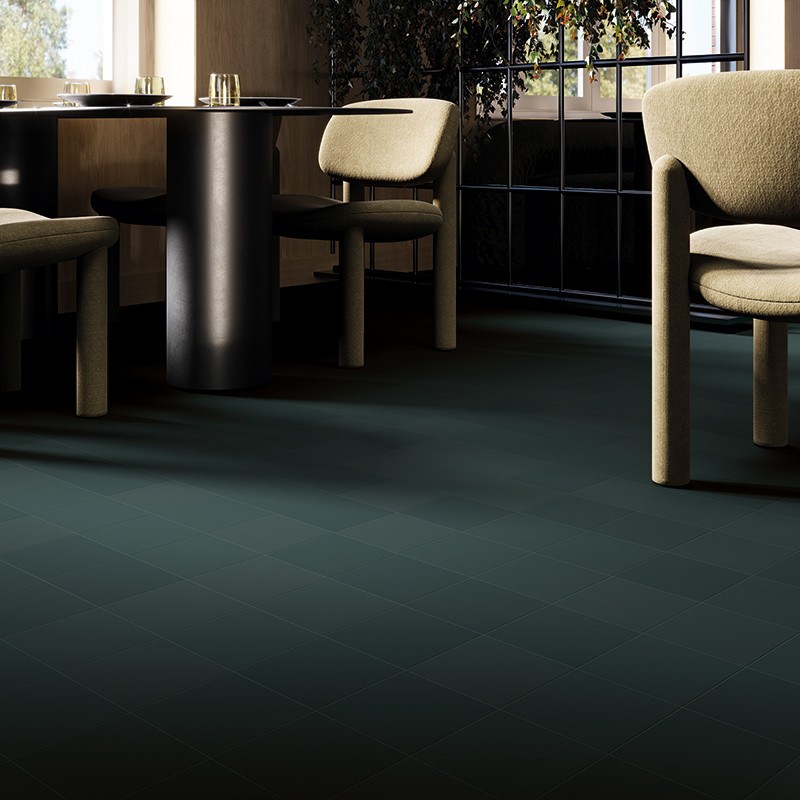
Hospitality and retail. Hydraulic tiles are widely used in restaurants, cafés, boutique hotels and design shops. A busy restaurant or a fashionable café cannot afford to close for floor polishing: the aesthetics of 1920 with the ceramic technology of 2026 is the intelligent choice.
How to combine hydraulic tiles with other materials
- Hydraulic + plain white walls: the most classic and most effective pairing. White surfaces leave the patterned floor as the undisputed protagonist.
- Hydraulic + natural wood or wood-look porcelain: the contrast between the cool geometry of hydraulic and the organic warmth of wood is always compelling, especially effective in open-plan kitchen-living spaces.
- Hydraulic floor + colour-blocked walls: sage green, petrol blue or terracotta walls paired with hydraulic floors in complementary tones are among the most published combinations in interior design media in 2026.
- Hydraulic as ceramic rug: placing hydraulic tiles only in a defined zone — beneath a dining table, in a kitchen bay or under a sofa grouping, surrounded by neutral porcelain, achieves maximum visual impact without overwhelming the space.
How to choose the right hydraulic tile for your project
- Colour palette: two-colour designs (white and blue, white and black, white and green) are the most versatile. Three- and multi-colour patterns have stronger impact but require more considered coordination with the rest of the space.
- Pattern complexity: in smaller rooms, a simpler geometric pattern (star, diamond, hexagon) is more effective than a complex design. In larger spaces, intricate patterns can develop their full potential.
- Format: the traditional 20×20 cm format is the most authentic. Also available in 33×33 cm and 60×60 cm for a more contemporary reading with fewer grout lines.
- Indoor vs. outdoor: ensure the tile carries an anti-slip rating of R10 or above and is frost-resistant for outdoor use.
- Cement vs. porcelain: original cement hydraulic tiles are irreplaceable in the restoration of historic buildings. For new renovation projects in high-use areas, porcelain hydraulic-look tiles are always the most practical and durable choice.
At Ceramic Connection you will find a carefully curated selection of porcelain hydraulic-look tiles in the motifs, formats and colour palettes most in demand for 2026, with personalised technical advice for every renovation project.
Related posts
-
 24/02/2023FRESH STYLE IN INTERIORS: VITALITY AND LIGHTNESS > Read more
 -
24/05/2023WHY ORDER 15% MORE CERAMIC MATERIAL? > Read more
-
01/08/2023REASONS TO USE CERAMIC TILES > Read more
-
15/09/2023HOW TO CHOOSE THE RIGHT ANTI-SLIP LEVEL > Read more