







Small kitchens can be incredibly functional and aesthetic when designed with the right materials. In recent years, the rustic style has gained popularity for its warmth, authenticity, and ability to create welcoming spaces even when square meters are limited. In this Ceramic Connection guide, we show you how rustic tiles can transform a small kitchen into a charming and personalized corner.
Why choose rustic style in small kitchens
Rustic style stands out for its natural materials, warm textures, and earthy colors. In small kitchens, these elements add visual depth and make the space feel cozier and balanced. Moreover, rustic tiles offer a wide variety of formats, textures, and shades, allowing you to personalize every corner without overcrowding. Choosing rustic style brings not only aesthetics but also practicality, combining durability with easy cleaning.
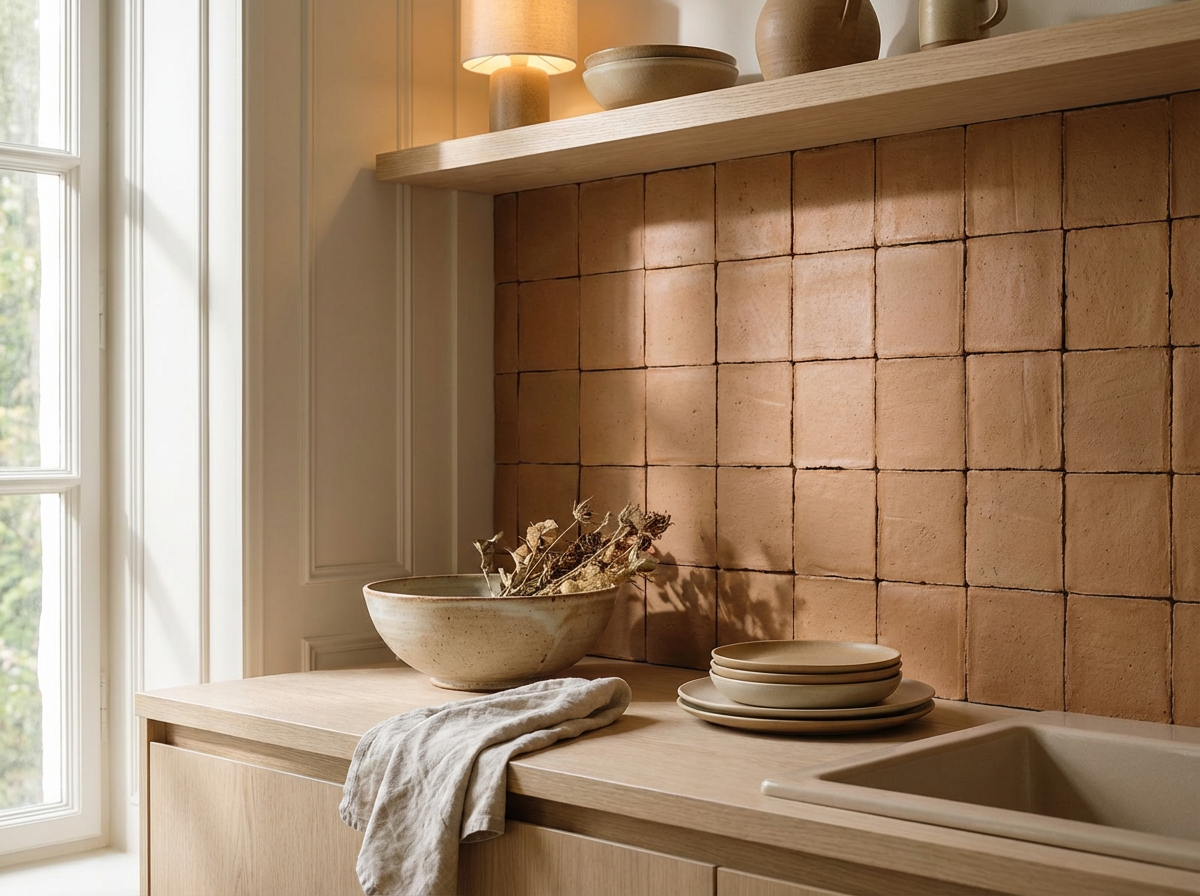
Light rustic tiles: your best ally to visually expand
In small kitchens, beige, cream, sand, or off-white tones help reflect natural light and create a sense of spaciousness. Stone-like finishes, light terracotta, or artisanal ceramics in neutral tones balance the space and add rustic style without overloading the room. Light tiles also allow combinations with wooden furniture and countertops, creating a warm and functional atmosphere.
Tile formats: which one to choose for your small kitchen
The size and format of the tile directly influence the perception of space. Here are the most recommended:
Small formats (10x10, 15x15 cm)
- Advantages: Perfect for backsplashes, giving a traditional, handcrafted touch.
- Recommended for: Kitchens under 6 m² looking for personality without overcrowding.
- Visual effect: Adds texture and detail, ideal for Mediterranean style.
Rectangular formats (5x15, 7,5x15 cm)
- Advantages: Vertical installation elongates walls and adds height.
- Recommended for: Kitchens with low ceilings.
- Visual effect: Subway style, versatile and modern-rustic.
Medium formats (20x20, 25x25 cm)
- Advantages: Perfect balance between tradition and contemporary style.
- Recommended for: Kitchens 6-10 m² seeking a balanced look.
- Visual effect: Expands the space without losing rustic character.
Artisanal effect: the star feature of rustic style
Tiles with handmade finishes, irregular edges, or natural glazes bring an authentic and traditional aesthetic. They are perfect for:
- Backsplash areas.
- Full walls.
- Small decorative panels.
Light relief and Mediterranean-inspired textures add depth without overloading. They also allow combining different colors and formats while maintaining harmony.
Combine rustic tiles with natural wood
The wood + rustic ceramic combination is one of the most used in small rural-style kitchens. Ceramic provides durability and easy cleaning, while wood adds warmth and authenticity. You can combine:
- Natural wood furniture with artisanal tiles.
- Light countertops with stone-effect coverings.
- Open shelves and honey tones to enhance rustic style.

Which tiles to choose for a small rustic kitchen
Some ideas that work especially well:
- Zellige-style tiles in cream, off-white, or earthy tones.
- Rustic hydraulic tiles in small formats to add character without crowding.
- Stone-effect coverings in soft shades.
- Light terracotta imitation tiles for a Mediterranean touch.
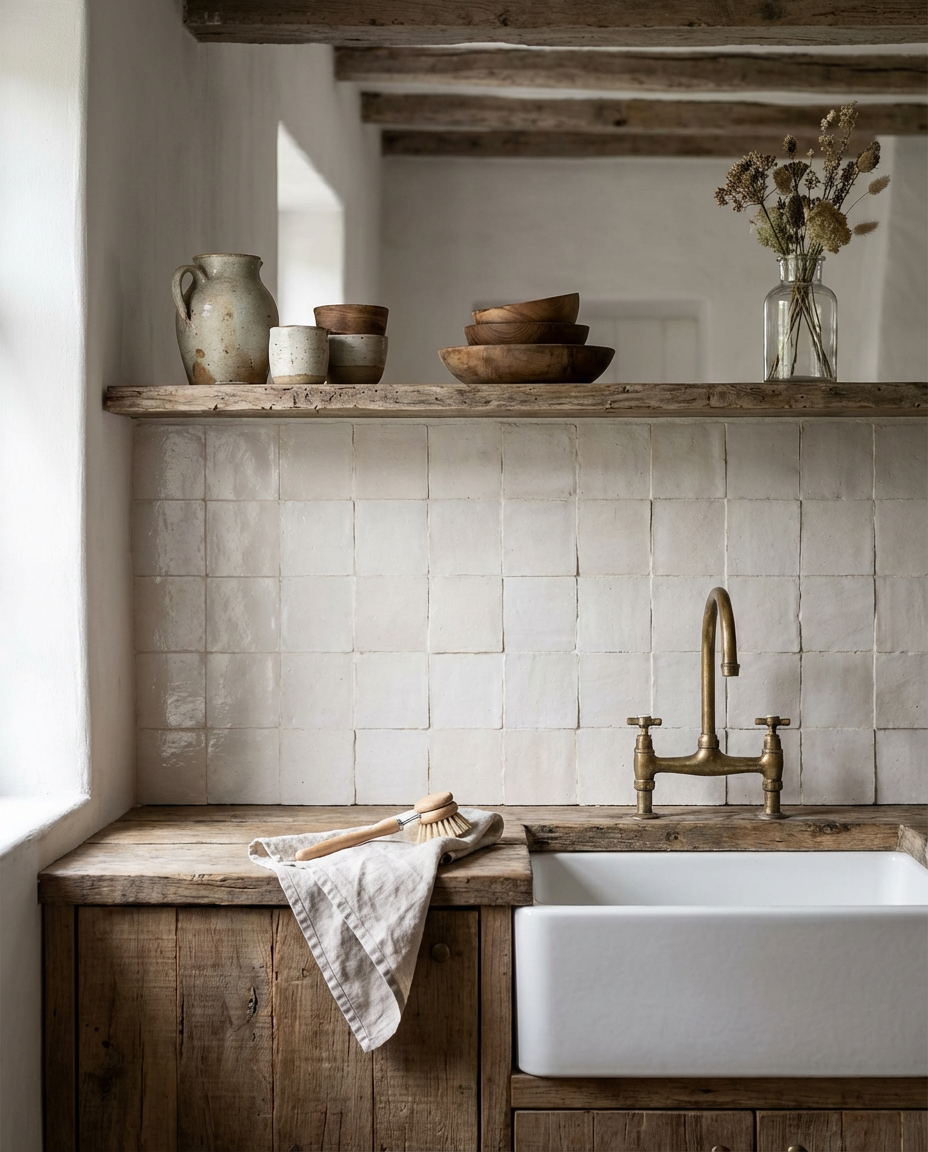
Tips to maximize space in small rustic kitchens
- Choose light tiles to visually expand the space.
- Add warm lighting to enhance textures.
- Combine a maximum of two materials to avoid overcrowding.
- Use open shelves to reinforce rustic look.
- Place tiles vertically to elongate walls.
- Use tiles up to the ceiling in corners.
- Use mirrors strategically to multiply light.
Common mistakes to avoid
- Excessive dark tiles: Reduce space visually, use only as accents.
- Too many different patterns: Mixing more than 2 tile types creates visual chaos.
- Ignoring grouting: Proper grout color makes a difference.
- Not calculating quantity: Always buy 10-15% extra for cuts and repairs.
- Skipping waterproofing: Essential in wet areas to prevent leaks.
- Poor lighting: Rustic tiles need good light to highlight textures.
Maintenance and cleaning of rustic tiles
Daily cleaning
- Use a damp cloth with lukewarm water and mild soap.
- Avoid abrasive products that damage the artisanal glaze.
- Dry surfaces well to prevent limescale stains.
Monthly deep cleaning
- Mix white vinegar with water (1:3) to remove accumulated grease.
- Use a soft brush on the joints.
- Rinse thoroughly and dry with microfiber cloth.
Finish protection
- Apply specific sealer for rustic ceramics every 12-18 months.
- Protect high-use areas (backsplash).
- Regularly check grout condition.
Related posts
