





TERRAZZO EFFECT TILES: TIMELESS ELEGANCE, ZERO MAINTENANCE

Terrazzo has been one of the most beloved flooring materials in Mediterranean architecture for decades. Its distinctive blend of cement with marble, quartz, or glass fragments gives it a unique, handcrafted texture full of character and history. However, the maintenance required by traditional terrazzo—periodic sealing, sensitivity to moisture, liquid absorption, and ongoing care—makes it less practical for modern, high-use kitchens and bathrooms.
The solution lies in tiles imitation terrazzo: a category of flooring that faithfully reproduces the appearance of classic terrazzo on a high-performance porcelain tile body fired at temperatures exceeding 1,200°C. The result is a surface that delivers all the visual appeal of terrazzo without any of its practical drawbacks.
What Is Terrazzo and Why Is It Trending Again?
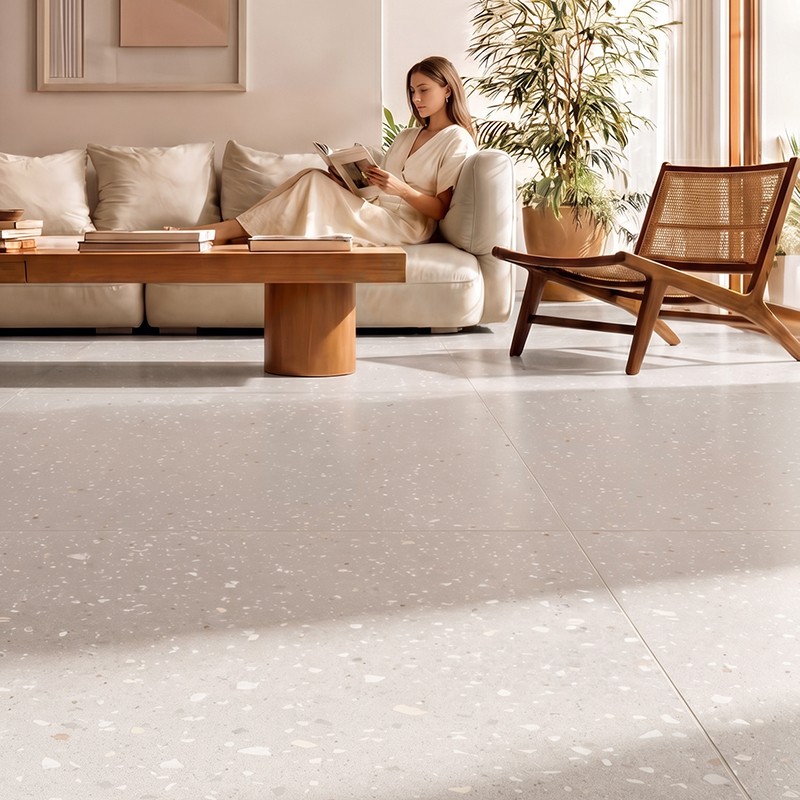
Terrazzo is a flooring material of Italian origin—documented as far back as Ancient Rome—that became popular throughout Europe and Latin America during the 20th century. It is made by combining cement with aggregates of marble, granite, glass, or quartz in different sizes. Once cured, the surface is polished to create its characteristic speckled and glossy appearance.
Its comeback is no coincidence. In an interior design landscape increasingly focused on materials with character, texture, and authenticity, terrazzo offers exactly what neutral minimalist spaces often lack: instant personality. According to leading industry exhibitions such as Cersaie 2025 and Coverings 2026, terrazzo ranks among the five most requested surface patterns by architects and interior designers worldwide.
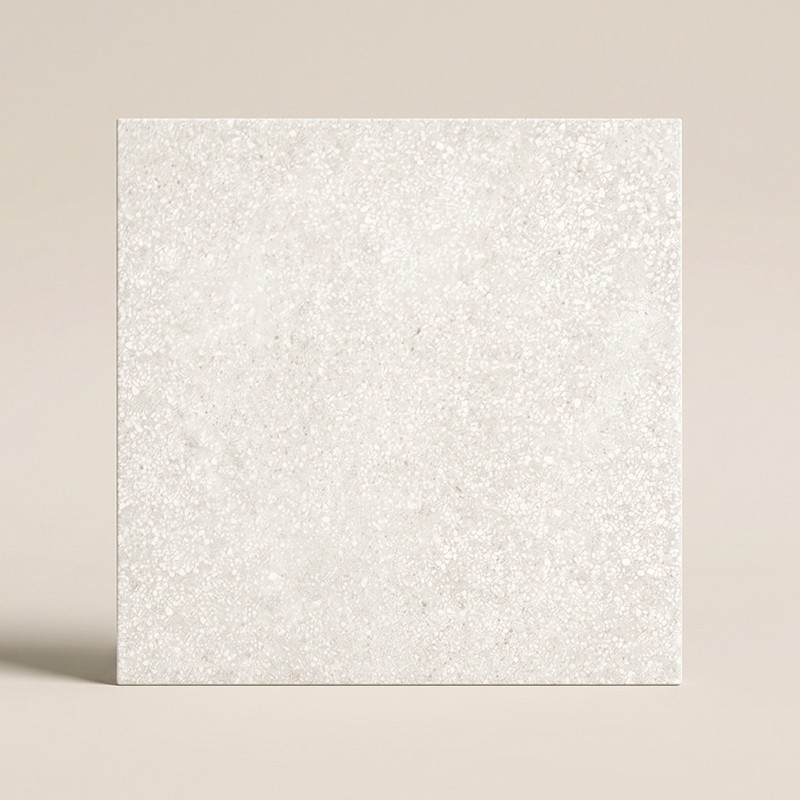
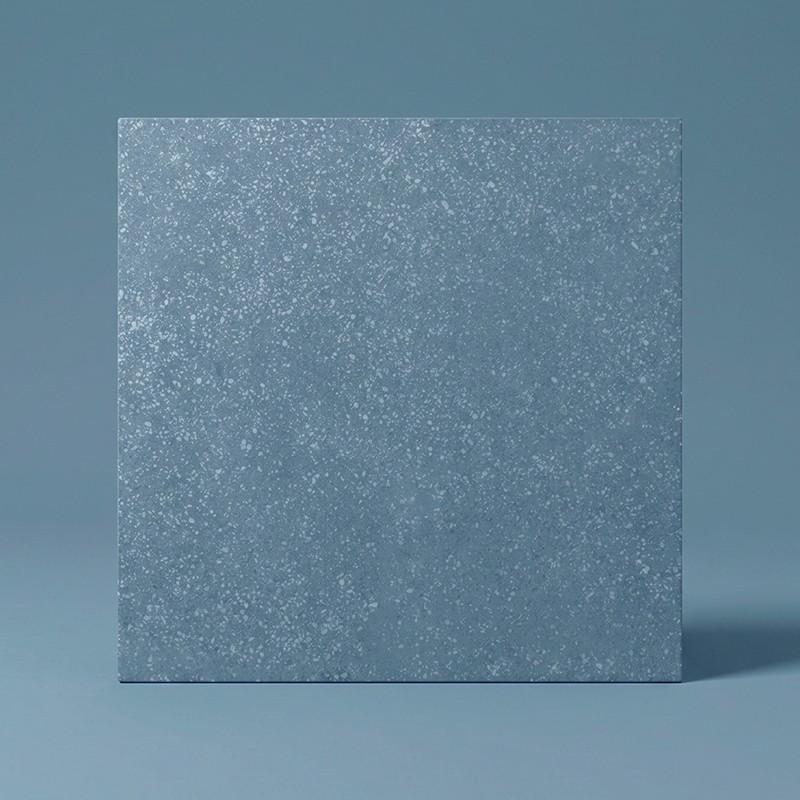
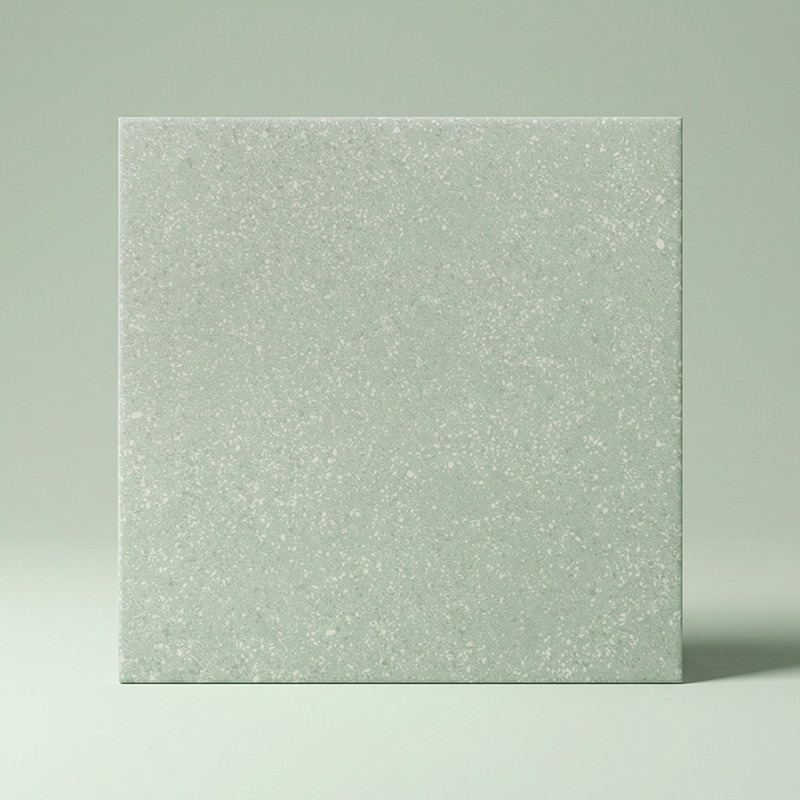
Advantages of Porcelain Terrazzo Effect Tiles Over Traditional Terrazzo
Porcelain terrazzo effect tiles are not simply a replica of the original material—they represent a technical evolution of the concept. Here are the key advantages compared to traditional cement terrazzo:
- Complete resistance to stains and moisture. Thanks to the vitrification process during firing, porcelain tiles do not absorb liquids, oils, or cleaning products. They are ideal for high-traffic kitchens and bathrooms.
- No sealing or special maintenance required. Cement terrazzo typically needs to be resealed every one to two years to maintain its waterproof properties. Porcelain tiles require no additional treatment after installation.
- Compatible with underfloor heating. Porcelain stoneware is one of the best thermal conductors among flooring materials, making it particularly efficient in underfloor heating systems.
- Precise colour consistency. Digital printing technology allows manufacturers to reproduce exact and uniform colour palettes within the same production batch, something that is difficult to achieve with handcrafted pigmented cement.
- Suitable for both indoor and outdoor use. In anti-slip finishes, terrazzo effect porcelain tiles can be installed on terraces, pool surrounds, and outdoor areas while withstanding frost and temperature fluctuations.
- Available in large formats. Unlike traditional terrazzo, which is generally limited to smaller dimensions, porcelain tiles are available in slabs up to 120×240 cm, ideal for creating seamless surfaces with minimal grout lines.
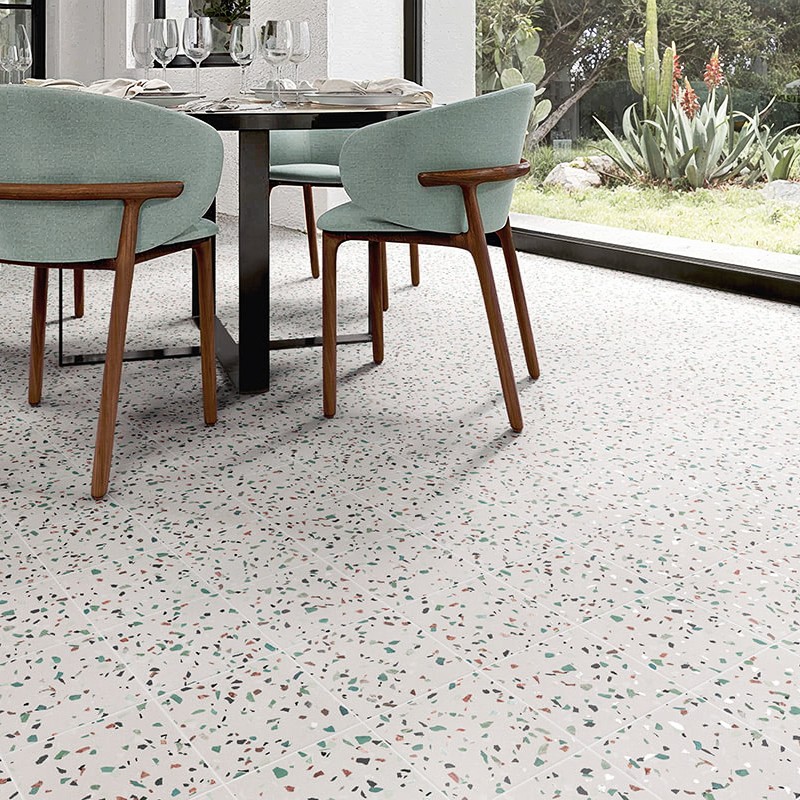
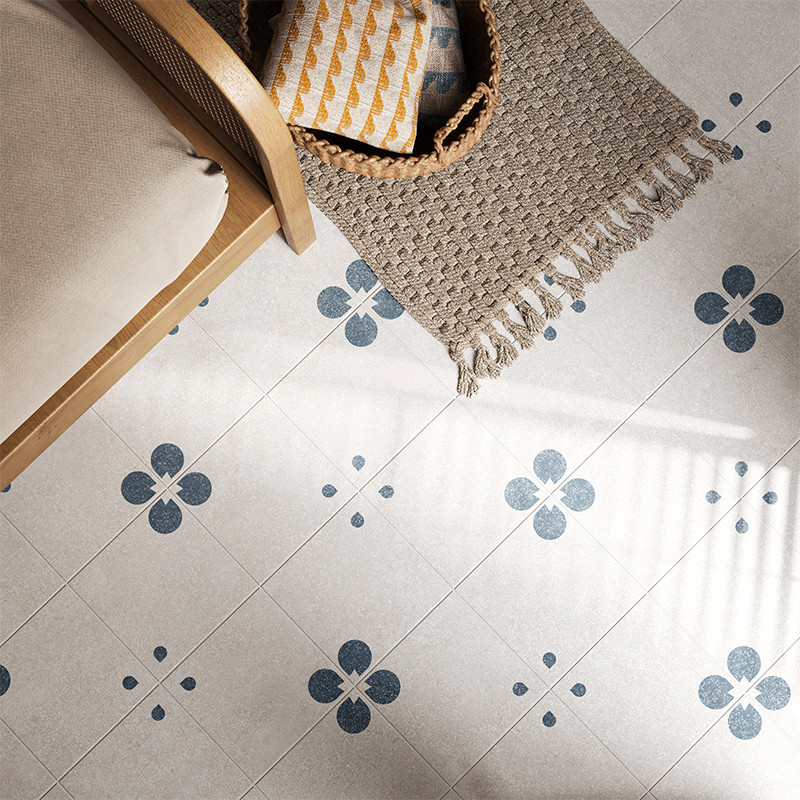
Porcelain Terrazzo Trends in 2026
The year 2026 confirms three major directions in terrazzo effect tile design:
Warm tones and Mediterranean palettes. Sandy beiges, soft terracottas, dusty pinks, and textured creams dominate the latest collections. Terrazzo in these shades is particularly attractive because it combines colour warmth with the visual richness of stone fragments without relying on more complex decorative patterns.
Large-chip terrazzo. Moving away from the fine, uniform textures that dominated previous years, 2026 embraces larger and more visible fragments that create a stronger handcrafted appearance. This style aligns perfectly with the growing demand for authentic materials with distinctive character.
Large formats with minimal grout lines. The combination of terrazzo patterns with large-format tiles (60×120 cm or larger) is one of the strongest trends of the year. Fewer grout joints visually expand spaces and reinforce the sense of continuity that is highly valued in contemporary bathrooms and open-plan living areas.
Related posts
