







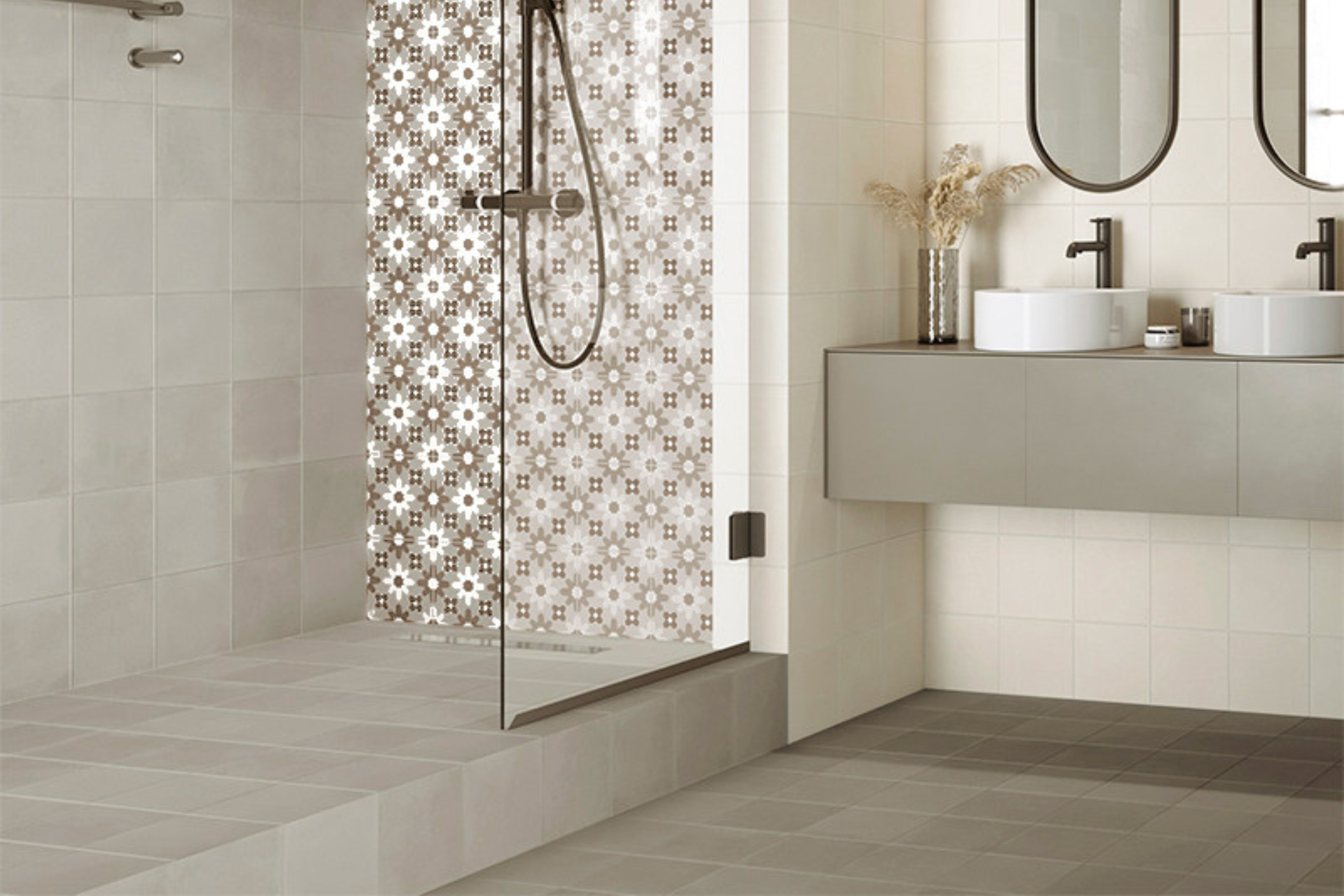
In a small bathroom, every decision matters. The right tile combination can enhance light, visually expand the space, and define the room’s style. In this practical guide, you’ll discover how to choose colors, formats, and finishes so your bathroom feels larger, functional, and harmonious—without giving up on design.
Light colors to gain spaciousness
Light tones such as beige tiles, off-white, or soft grays reflect light and provide a sense of cleanliness and continuity. A winning strategy is to apply a light base color on walls and floors, reserving an accent tone (sand, taupe, or soft blue) for a single wall, the shower niche, or the vanity area. Avoid very strong contrasts on large surfaces: in small spaces, they can fragment the room.
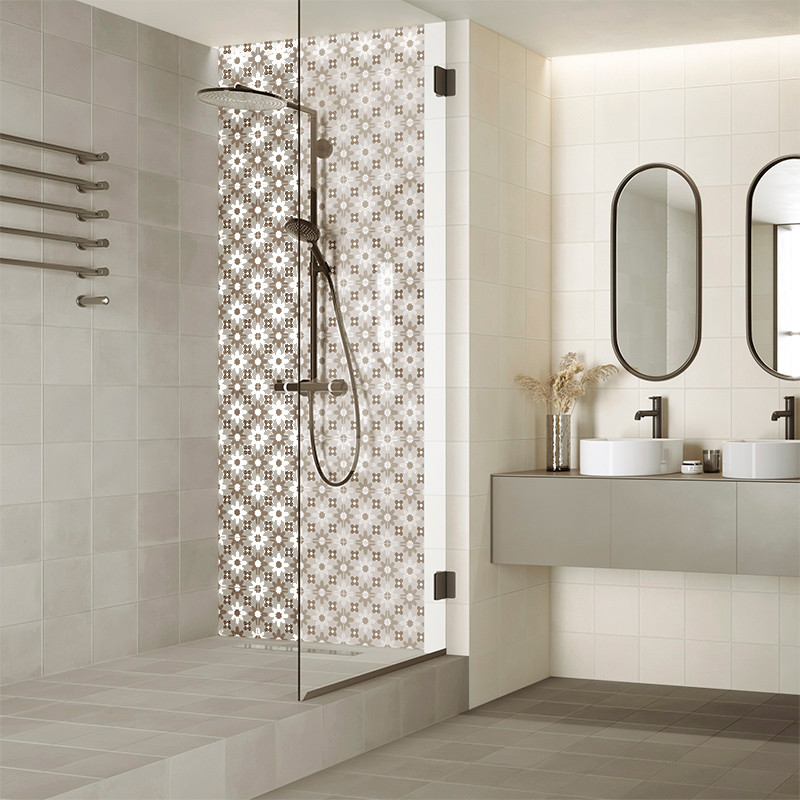
Mixing formats for dynamism (without overloading)
The key is to combine 1 dominant format and 1 accent format. For example, a large-format porcelain tile on the floor (60×120) and a subway-style rectangular tile on the walls. The large format reduces joints and creates continuity; the small format adds rhythm in strategic areas. Keep the palette within the same color family for a smooth transition.
Winning effects: marble, wood and cement
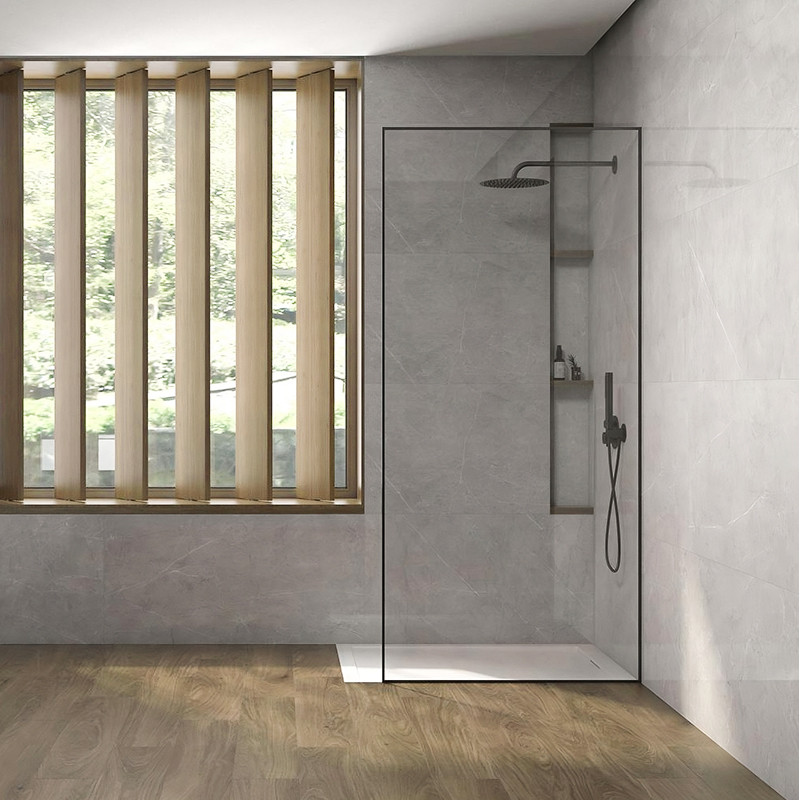
Material effects elevate the design without overwhelming the bathroom. The marble effect in light shades brings brightness and timeless aesthetics; use it on a main wall or in the shower tray. Ceramic wood in medium tones adds warmth while remaining practical. Soft cement works as a contemporary neutral base. Combine them with plain pieces to balance the set.
Vertical and horizontal layouts depending on height
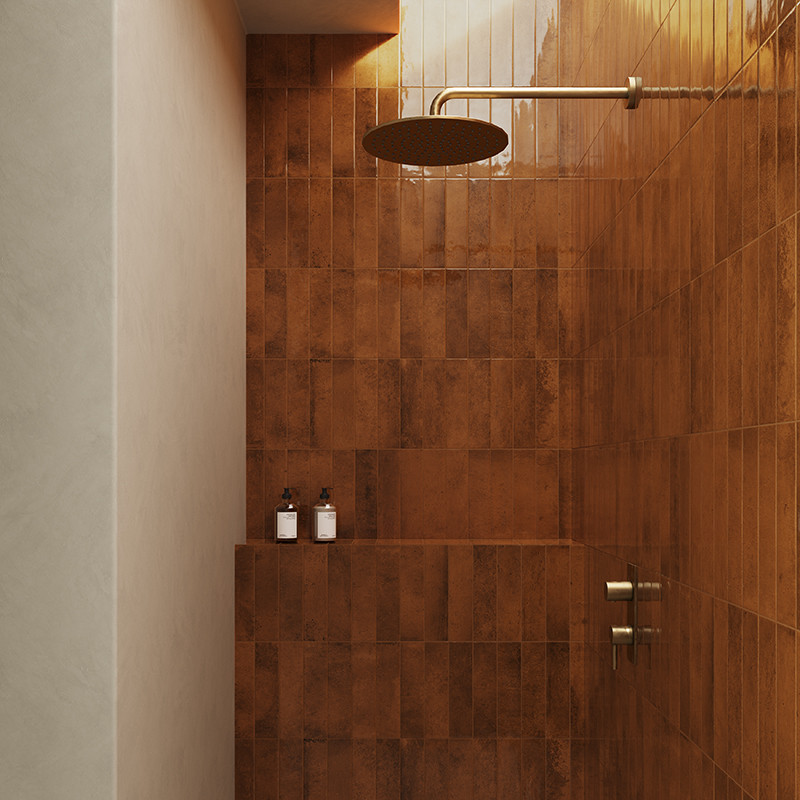
If the bathroom has a low ceiling, place rectangular tiles vertically to visually “stretch” the walls. If it’s narrow, use horizontal tiles to widen the plane. Another effective technique is tiling up to half the wall with one format and finishing with washable paint in the same tone; this lightens the visual volume and reduces grout lines.
Practical tips for a stylish small bathroom
1) Choose satin or silky matte finishes to minimize harsh reflections in very bright spaces.
2) Use grout in a color coordinated with the tile to avoid “drawing” too many lines.
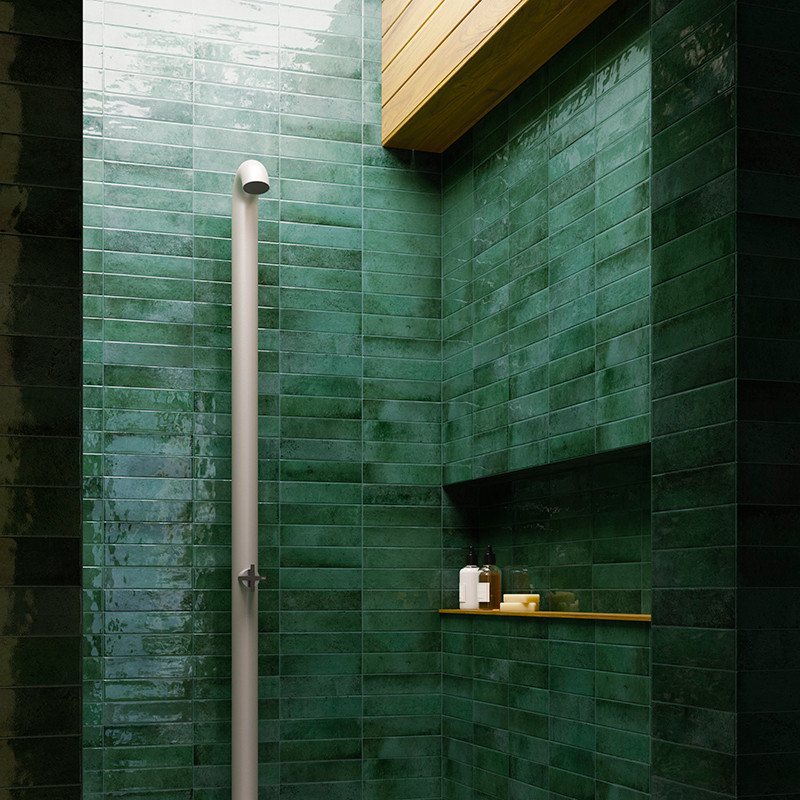
3) Integrate built-in niches in the shower using the same wall tile for continuity.
4) On floors, choose anti-slip tiles (especially in wet areas).
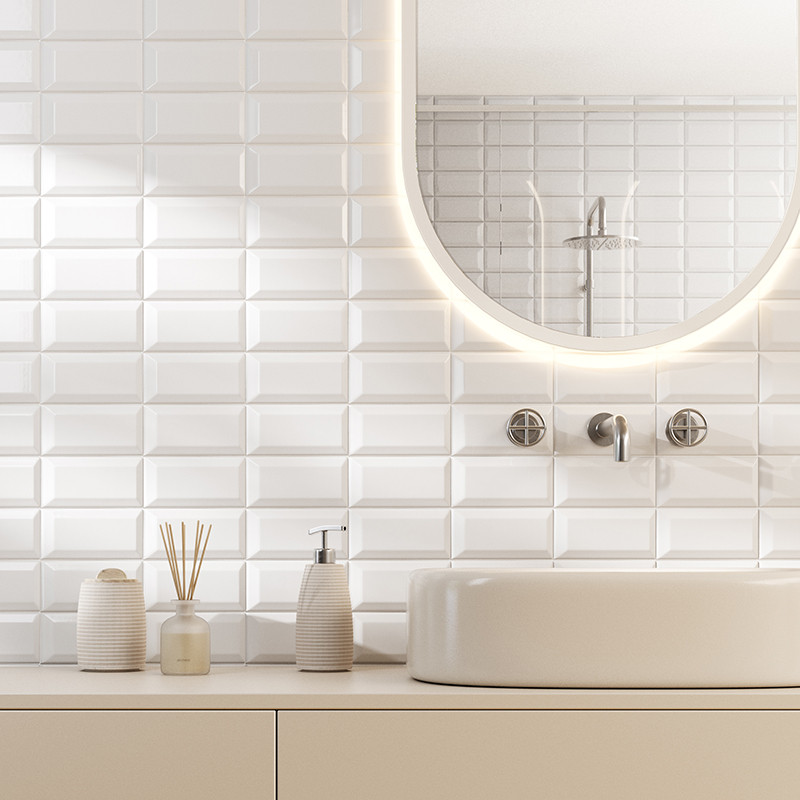
5) Large mirrors and perimeter lighting enhance the spacious effect of light tiles.
6) Stick to a palette of 2–3 colors and a maximum of 2 finishes to avoid visual clutter.
Related posts
