





REPLACING A BATH WITH A SHOWER: THE BEST TILING SOLUTIONS

TRANSFORM YOUR BATHROOM WITH THE BEST TILE SOLUTIONS
Replacing a bathtub with a shower is one of the most requested renovations today, not only for aesthetic reasons, but also for functionality, accessibility, and water savings. However, a common challenge arises: how do you cover the space left by the old bathtub without renovating the entire bathroom? This is where tile solutions for replacing a bathtub with a shower come into play, allowing for a seamless and stylish integration.
To achieve a professional result, there are various bathtub to shower renovation ideas, ranging from bold contrast to visual continuity. The most important factor is selecting materials that guarantee waterproofing and safety, especially in the area directly exposed to water. The choice of material not only defines the style, but also the long-term durability of the renovation.
STEP BY STEP: HOW TO PLAN YOUR BATHTUB TO SHOWER CONVERSION
Before choosing tiles, it is essential to measure the space left by the bathtub and assess the condition of the existing wall covering. Many homeowners look for examples of tile solutions for bathtub to shower conversion for inspiration, but every bathroom has specific characteristics that influence the final decision.
- Space dimensions: A walk-in shower requires full perimeter waterproofing.
- Condition of the existing tiles: If there are cracks or loose pieces, renovation is recommended.
- Existing plumbing: Make sure the drainage system is properly sized.
STRATEGIES AND EXAMPLES OF TILE SOLUTIONS FOR BATHTUB TO SHOWER CONVERSION
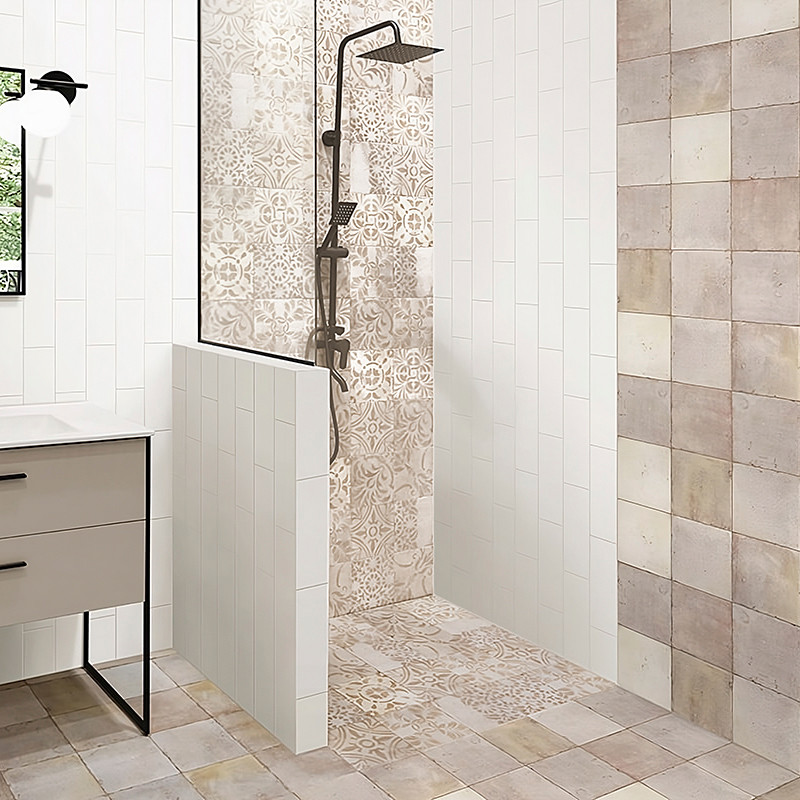
When removing a bathtub, you often find an uncovered section of wall. One of the most effective tile solutions for replacing a bathtub with a shower is creating a contrast panel. Instead of trying to match the existing tiles (which is almost impossible in older bathrooms), you can intentionally choose a different material to create a design feature.
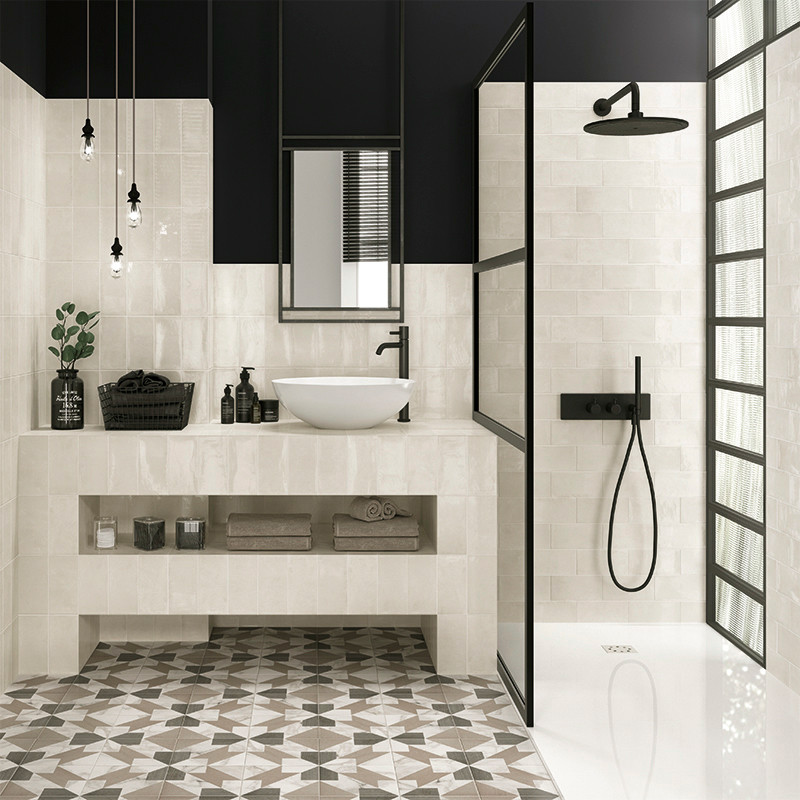
Some examples of tile solutions for bathtub to shower conversion include subway tiles, patterned hydraulic-style mosaics, or large-format stone-look tiles. These options not only cover the exposed space but also turn the shower area into the focal point of the bathroom. If the rest of your walls are plain white, adding texture or a deeper color in the new shower area will instantly elevate the design.
THE IMPORTANCE OF TILE COMBINATIONS FOR SHOWERS
A well-balanced tile combination for showers is essential for a cohesive design. In smaller spaces, light tones help enhance brightness. For an industrial or contemporary style, cement greys or matte black tiles are excellent choices. The key is ensuring that the tile combination for bathtub to shower replacement feels intentional rather than like an afterthought.
For example, if your bathroom has traditional white 20×25 cm tiles, you can create contrast with a hexagonal mosaic in grey or beige tones within the shower area. This tile combination adds visual interest without disrupting the overall harmony.
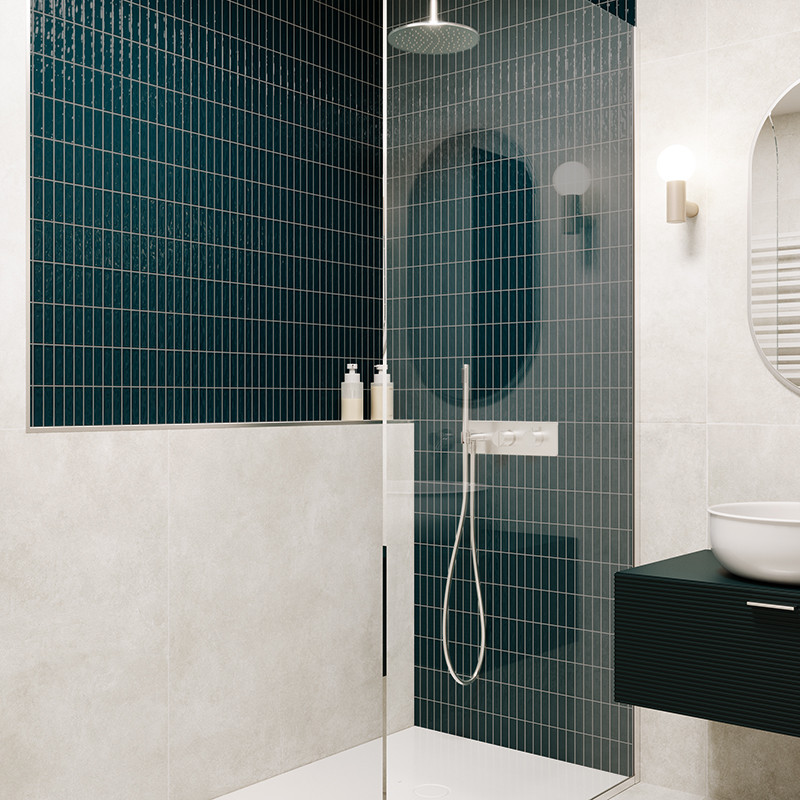
In bathrooms with large-format tiles already installed, the best strategy is to maintain the same color palette while changing the finish — matte instead of glossy, or vice versa. For a subtle transition, decorative metal profiles between old and new tiles can soften the visual break. Additionally, the tiles specifically designed for showers you choose should have anti-slip properties rated R11 or higher, especially on the shower base where constant water contact occurs.
DECORATION AND TRENDS WHEN REPLACING A BATHTUB WITH A SHOWER
Bathroom design when converting a bathtub into a shower has evolved toward functional minimalism. If you’re looking for inspiration for your entire space, our selection of bathroom tiles includes options that perfectly complement any shower style, from Nordic to contemporary Mediterranean.
Built-in wall niches within the shower, tiled with the same material as the main panel, are currently very popular. They are not only stylish but also eliminate the need for metal shelves that may rust over time.
Another trend is wood-look tiles, which add warmth and create a spa-like atmosphere at home. Don’t forget that grout color is also a decorative element: choosing a contrasting grout can highlight the tile layout pattern.
COMMON MISTAKES WHEN CONVERTING A BATHTUB INTO A SHOWER (AND HOW TO AVOID THEM)
- Mistake 1: Ignoring floor slope: The shower base must have a slight slope toward the drain (minimum 2%). Without it, water may pool.
- Mistake 2: Using adhesives not suitable for wet areas: Even high-quality tiles can fail if the adhesive is not flexible and waterproof (C2TE type).
- Mistake 3: Not properly sealing corners: Wall-to-floor joints should use a specific elastic sealant, not standard grout that may crack with temperature changes.
CONCLUSION: YOUR NEW SHOWER SOONER THAN YOU THINK
Choosing the right materials accounts for 50% of the success; professional installation makes up the other 50%. The right tile solutions for replacing a bathtub with a shower allow you to upgrade your bathroom without a full renovation while keeping your investment under control.
If you’re planning this upgrade, explore our specialized categories to find the perfect materials that combine style, safety, and durability in every square meter.
Related posts
