






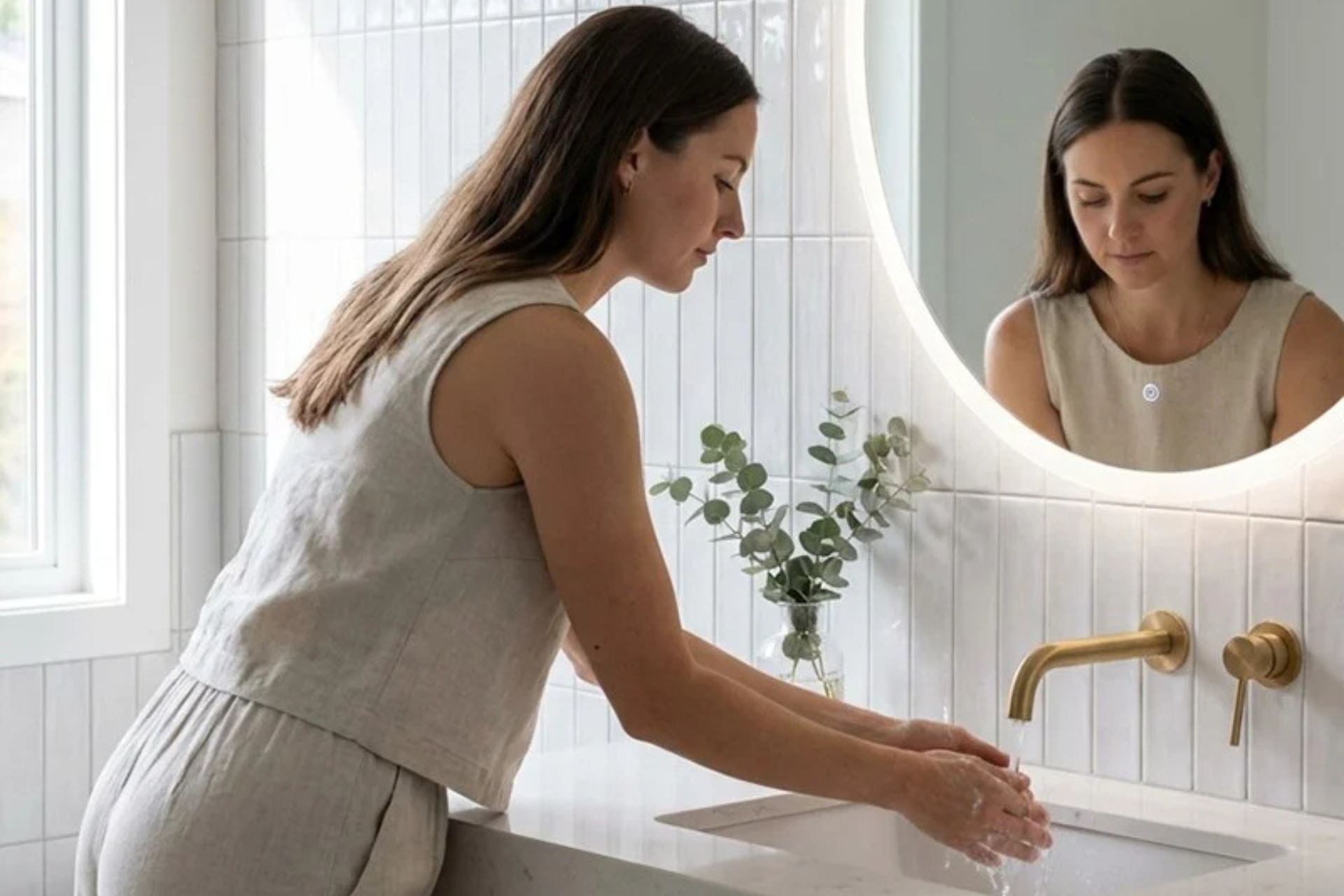
Bathroom tiles are exposed every day to moisture, limescale, soap residue and mould. Regular maintenance using the right cleaning products prevents stubborn dirt from building up while preserving the appearance of the tiles without damaging their surface. If you want to clean bathroom tiles properly, it is important to choose the right product according to both the type of dirt and the tile material.
IDENTIFY THE PROBLEM BEFORE CHOOSING A CLEANING PRODUCT
Not all bathroom tiles become dirty in the same way. Before reaching for a cleaning product, take a moment to identify exactly what needs to be removed.
Limescale usually appears as white or greyish deposits around taps, inside the shower and on wall tiles that are constantly exposed to water. Soap, shampoo and shower gel leave behind a sticky film, especially on floor tiles. Mould generally shows up as black stains in grout joints and damp corners where moisture accumulates. If your tiles simply look dull without visible stains, a degreasing cleaner followed by a thorough rinse is usually enough.
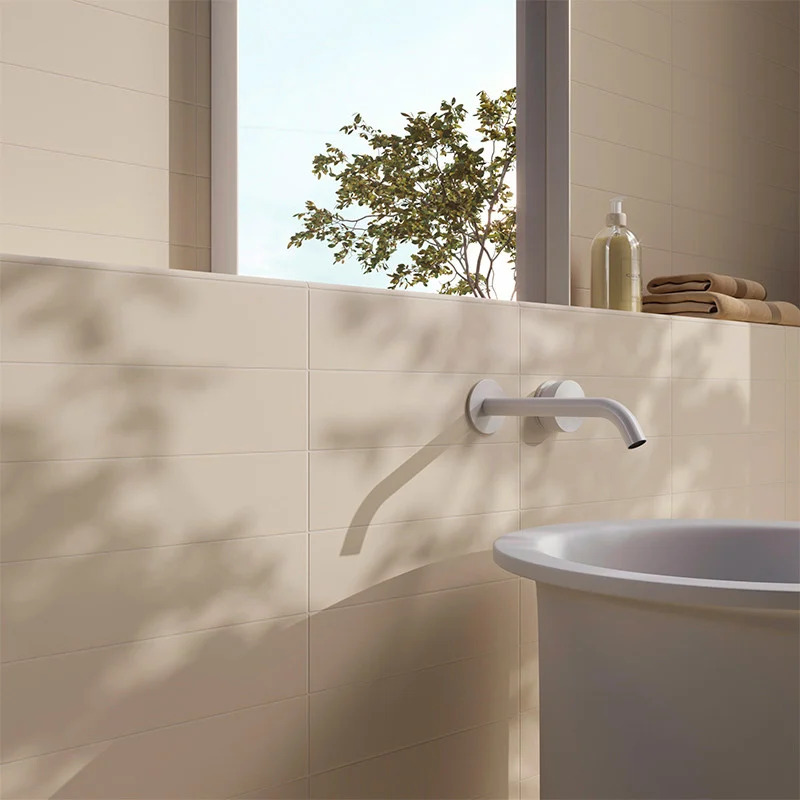
CHOOSE THE RIGHT PRODUCT FOR EACH TYPE OF DIRT AND TILE
One of the most common mistakes when trying to clean bathroom tiles is using acidic products, such as vinegar or lemon, on delicate surfaces or applying aggressive limescale removers to cement grout. The following table shows which products are suitable for each type of tile.
| Problem | Recommended Product | Porcelain Tiles | Natural Stone | Zellige / Handmade Ceramic |
|---|---|---|---|---|
| Light limescale | Diluted white vinegar (50/50) | ✅ | ❌ | ❌ |
| Soap and grease residue | Black soap + warm water | ✅ | ✅ | ✅ |
| Stubborn stains / dull finish | Baking soda paste | ✅ | ✅ (gently) | ✅ (gently) |
| Heavy limescale deposits | Diluted citric acid | ✅ | ❌ | ❌ |
| Mould | Diluted bleach (1:4) | ✅ | ❌ | ❌ |
| Regular maintenance | Black soap + warm water | ✅ | ✅ | ✅ |
| Deep cleaning | Steam cleaner | ✅ | ✅ | ✅ (low pressure) |
NATURAL METHODS FOR CLEANING BATHROOM TILES
White Vinegar for Removing Limescale
If you want to clean bathroom tiles naturally, mix equal parts white vinegar and warm water in a spray bottle. Spray the solution onto the tiles, leave it to work for around five minutes, then wipe the surface with a soft, non-abrasive sponge.
For stubborn limescale deposits, apply undiluted white vinegar directly to the affected area. Cover it with a damp cloth and leave it for fifteen to twenty minutes before gently scrubbing and rinsing thoroughly with clean water. Always dampen the grout beforehand, as prolonged exposure to acid may damage it.
This method is highly effective on porcelain and standard ceramic tiles. However, white vinegar should never be used on natural stone such as marble, travertine or slate, or on zellige tiles, as its acidity can permanently damage the surface.
Black Soap for Everyday Cleaning
Two tablespoons of liquid black soap mixed into a bucket of warm water make an excellent cleaner for routine bathroom maintenance. It removes grease, neutralises odours and is suitable for almost every type of tile, including delicate surfaces.
Use a well-wrung mop on floor tiles and a soft sponge on wall tiles. Always rinse thoroughly with clean water afterwards and dry the surface to prevent watermarks and maintain the tiles' natural shine.
Baking Soda for Stubborn Stains
Mix three tablespoons of baking soda with a little water to create a paste. Apply it to stained areas, leave it for around ten minutes, then gently scrub with a soft brush.
Baking soda has a mild abrasive effect. On highly polished tiles or glazed zellige, it is better to use a soft sponge with gentle circular movements to avoid scratching the finish.
Citric Acid for Heavy Limescale
Citric acid is often even more effective than vinegar for removing old, stubborn limescale. Dissolve four to five tablespoons of citric acid in one litre of warm water. Apply the solution with a soft brush, leave it to work for five minutes, then rinse thoroughly.
Like vinegar, citric acid should only be used on porcelain and standard ceramic tiles. It should never be applied to natural stone or old, fragile grout joints.
Steam Cleaner
A steam cleaner removes deeply embedded dirt, kills bacteria and mould, and requires no chemical cleaning products. It is one of the most versatile ways to clean bathroom tiles, as it is suitable for porcelain, natural stone and zellige, provided a low steam pressure is used on more delicate materials.
Move the steam nozzle slowly across the tiles and immediately wipe the surface with a microfibre cloth to remove loosened dirt. Steam is particularly effective on grout lines, where it removes black stains without damaging the grout.
HOW TO CLEAN EACH TYPE OF BATHROOM TILE
Natural Stone (Marble, Travertine and Slate)
Marble and other natural stones are porous materials that are highly sensitive to acidic cleaners. Never use vinegar, lemon juice or citric acid on these surfaces.
Instead, clean them only with black soap, a pH-neutral cleaner or a steam cleaner. After cleaning, apply a stone sealer at least once a year to reduce staining and limescale build-up. Travertine should also be treated regularly with the protective product recommended by the manufacturer to seal its natural pores.
Zellige and Handmade Ceramic Tiles
Bathroom zellige tiles feature a handcrafted glazed finish that can be damaged by acidic or abrasive cleaning products.
The safest way to clean bathroom tiles of this type is to use diluted black soap or simply clean water with a soft sponge. If using a steam cleaner, always set it to the lowest pressure. Applying a specialist sealer for zellige twice a year helps protect the glaze and makes limescale much easier to remove before it becomes firmly attached.
Polished or High-Gloss Porcelain Tiles
Polished or high-gloss porcelain tiles tend to show fingerprints, water spots and limescale more easily than matt finishes. Dry the surface after every cleaning session using a microfibre cloth.
For an even shinier finish, add a small amount of methylated spirits to the cloth used for the final polish. This leaves the tiles streak-free with a brilliant shine.
CHECKLIST FOR CLEANING BATHROOM TILES CORRECTLY
- ✔ Identify the tile material before choosing a cleaning product.
- ✔ Ventilate the bathroom well, especially when using vinegar or bleach.
- ✔ Remove dust or vacuum before applying wet cleaning products.
- ✔ Dampen grout joints before using acidic cleaners.
- ✔ Test any cleaning product on an inconspicuous area when dealing with delicate materials.
- ✔ Never mix white vinegar and bleach.
- ✔ Rinse thoroughly with clean water after every treatment.
- ✔ Dry the tiles with a microfibre cloth to prevent streaks and watermarks.
- ✔ Apply a grout sealer after carrying out a deep clean.
- ✔ Ventilate the bathroom after every shower to reduce moisture and prevent mould growth.
FREQUENTLY ASKED QUESTIONS ABOUT CLEANING BATHROOM TILES
What is the best product for cleaning bathroom tiles?
The best product depends on both the type of dirt and the tile material. Black soap is the most versatile option because it removes grease without damaging the surface and is suitable for almost every type of wall and floor tile. For limescale, diluted white vinegar works extremely well on porcelain and standard ceramic tiles but should not be used on natural stone or zellige. If you want a deep clean without chemical products, a steam cleaner is one of the best solutions.
Can you clean bathroom tiles with white vinegar?
Yes, provided the tiles are porcelain or glazed ceramic. White vinegar effectively dissolves limescale while disinfecting the surface without leaving residue behind. However, it should never be used on marble, travertine, slate, zellige or old grout joints, as its acidity can damage these materials. Always dilute white vinegar with an equal amount of water and dampen the grout before applying it.
Why shouldn't you mix white vinegar and baking soda?
When mixed together, white vinegar and baking soda undergo an acid-base reaction that largely neutralises the cleaning properties of both ingredients. The result is mainly water and carbon dioxide, with very little additional cleaning power. Instead, use baking soda paste first to loosen dirt and stains, then apply diluted vinegar afterwards to remove limescale.
How can you make bathroom tiles look like new again?
Start with a deep clean using black soap to remove grease and soap residue. Next, treat any limescale with white vinegar or citric acid, depending on the tile material. Clean the grout using a paste made from baking soda and hydrogen peroxide, dry the tiles thoroughly with a microfibre cloth, and finish by applying a grout sealer. In most cases, this process restores bathroom tiles to their original appearance without the need for replacement.
How can you prevent bathroom tiles from getting dirty so quickly?
A few simple maintenance habits make a big difference. After every shower, use a squeegee or a dry cloth to remove water from the tiles before limescale has a chance to build up. Ventilate the bathroom well to reduce moisture levels and prevent mould growth. Applying a grout sealer twice a year also helps repel dirt, making the tiles much easier to keep clean over time.
Related posts
-
 07/08/2023HOW TO CLEAN PORCELAIN TILES PROPERLY > Read more
 -
05/10/2023TRICKS TO KEEP YOUR TILES SHINING LIKE NEW > Read more
-
09/01/2024RECTIFIED VS NON-RECTIFIED TILES > Read more
-
12/04/2024HOW TO CLEAN TILE GROUT AND RESTORE SHINE > Read more